

What does a fourth-generation, zero-energy-consumption AI-powered RAS greenhouse look like? An analysis of trends in industrialised recirculating aquaculture systems
In 2026, the global recirculating aquaculture system (RAS) sector hit the fast-forward button: in Europe, land-based salmon ‘super-factories’ — each involving investments often running into hundreds of millions of US dollars — were established one after another, whilst Atlantic bluefin tuna also entered the era of commercial, factory-based aquaculture thanks to floating RAS systems; In the Middle East, Saudi Arabia’s ‘Vision 2030’ has identified food security and aquaculture as key development areas, with closed-loop recirculating aquaculture systems creating ‘new farmland’ in the desert, whilst zero-energy smart greenhouses have emerged as a hot technological trend. As ‘fourth-generation RAS’ features frequently at global industry exhibitions and in major project plans, what exactly does it look like? From ‘high-flow, high-exchange’ flow-through aquaculture to zero-energy AI-powered smart greenhouses, what technological iterations has RAS recirculating aquaculture undergone? And what can it offer for the farming of benthic aquatic species? Wolize takes you through it all in one go.
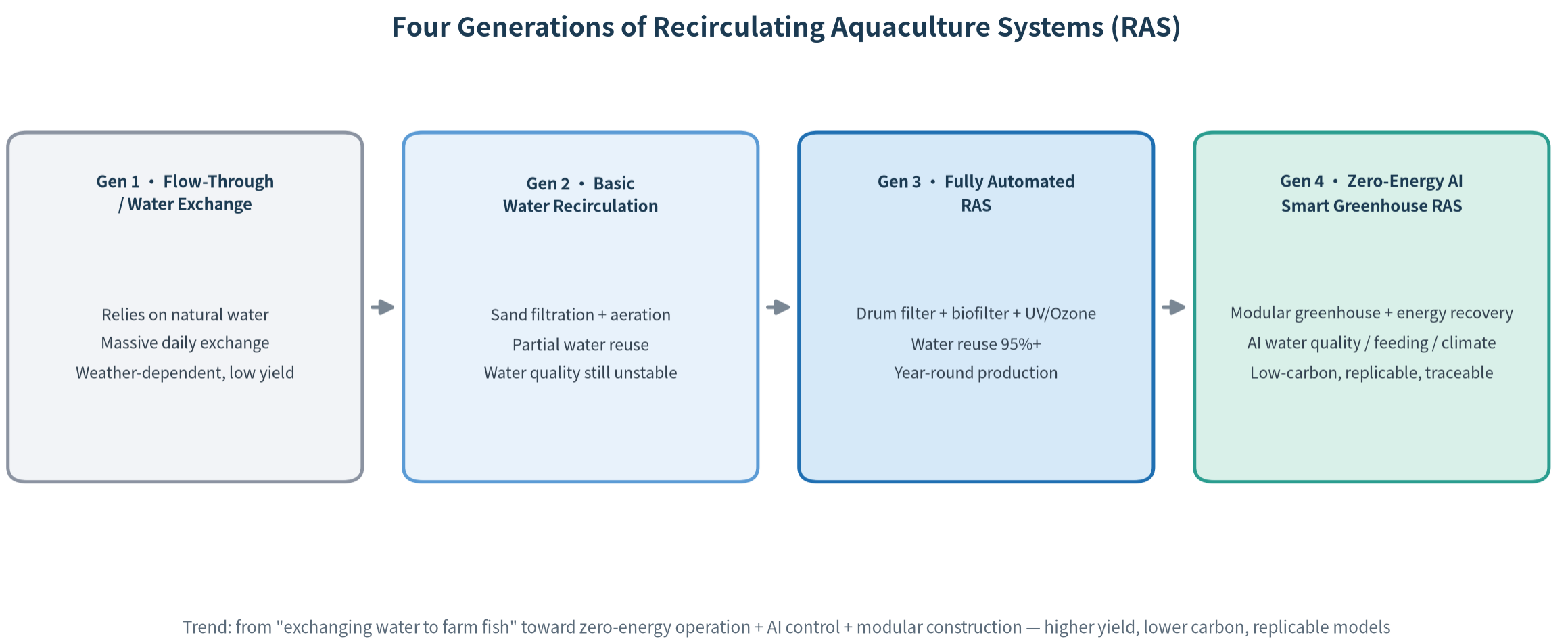
Figure 1: Four Generations of Recirculating Aquaculture Systems (RAS)
I. From Water Exchange to Zero-Energy AI: The Four Generations of RAS Recirculating Aquaculture
First Generation: Flow-through/Water Exchange Aquaculture
This method relies on large-scale drainage and water exchange from natural water sources, making it heavily dependent on weather conditions. Whilst it requires low capital investment and can be implemented quickly, it consumes vast amounts of water, yields are unstable, and effluent is discharged directly into the environment. As such, it is increasingly at odds with ever-tighter environmental regulations and has gradually been phased out of the mainstream market, surviving only in a few regions with exceptionally abundant water resources.
Second Generation: Primary Water Treatment and Recirculation
Building upon the water-exchange model, this approach incorporates primary water treatment processes such as sand filtration and basic aeration, enabling partial water reuse and a significant reduction in water consumption. However, due to the absence of biological purification and disinfection units, levels of ammonia nitrogen and nitrite remain highly volatile, and the risk of disease has not been fundamentally addressed. This system is generally regarded as a transitional form between traditional aquaculture and modern factory farming.
Third Generation: Fully Automated RAS
A fully automated RAS (Recirculating Aquaculture System) comprising drum microfiltration, biological filters, UV/ozone disinfection and intelligent environmental control has been successfully implemented: uneaten feed and faeces are promptly removed by microfiltration units; biological filters convert ammonia nitrogen into low-toxicity nitrate; disinfection units prevent the spread of pathogens; and the environmental control system maintains constant temperature and oxygen levels. With a recirculation rate of effluent exceeding 95 per cent and the capacity for continuous year-round production, this is currently the mainstream configuration for industrialised aquaculture projects in China and serves as the technological foundation for new projects.
Fourth Generation: Zero-Energy AI Smart Greenhouse RAS
Building upon the third generation, this system incorporates three key features: modular construction, zero-energy design and AI-powered intelligent management. The main greenhouse structure is rapidly assembled like ‘building blocks’; photovoltaic panels, heat pumps and energy recovery enable the system to operate at near ‘zero energy’ levels; whilst AI algorithms automatically optimise water quality, feeding and environmental control, whilst generating fully traceable aquaculture data throughout the process. The Wenshan Guangnan recirculating aquaculture project (with a total investment of 1 billion yuan), recently announced in China, is a prime example of this approach: built upon a fully enclosed recirculating aquaculture system, it is equipped with an AI-powered management system throughout the entire process, enabling fully automated regulation of water quality, feeding and environmental parameters, whilst simultaneously establishing facilities for the deep processing of bioactive peptides derived from fish, thereby integrating the entire industrial chain.
II. The Three Core Technologies of Fourth-Generation RAS
1. Modular Construction: Building Fish Farms Like Building Blocks
Standardised steel modules are prefabricated in factories and assembled on-site, significantly reducing the construction cycle compared to traditional civil engineering. Furthermore, production capacity can be scaled up in phases as required — the first phase involves constructing a single facility for trial operation to validate the species and market before expanding into phases two and three. For aquaculture enterprises planning to ‘test the waters before scaling up’, as well as for overseas projects requiring rapid delivery, prefabricated construction offers a more flexible solution.
2. Zero-Energy Design: Reducing Operating Costs
Energy consumption is the largest operational cost in RAS recirculating aquaculture systems, with temperature control and water pumps often accounting for the lion’s share. The fourth-generation solution significantly reduces overall energy consumption through a combination of photovoltaic systems, air-source heat pumps, insulated greenhouse envelopes, energy recovery from drainage, and variable-frequency drives. Coupled with the passive daylighting and thermal insulation design of the ‘zero-energy AI smart greenhouse’, this ensures that species requiring long-term temperature control — such as abalone and sea cucumbers — no longer need to worry about electricity bills; ‘high-density aquaculture’ no longer equates to ‘high-electricity-cost aquaculture’.
3. AI-powered Management: Data-driven Aquaculture Decision-making
Online sensors collect real-time data on parameters such as dissolved oxygen, ammonia nitrogen, pH and temperature. AI models automatically adjust pump frequency, aeration levels, feeding schedules and heating strategies, whilst alerts regarding anomalies are sent directly to mobile devices. Aquaculture data is accumulated daily to form traceable ‘aquaculture records’, which not only facilitate internal review and management but also provide credible evidence for green certification, export registration and financial insurance. Aquaculture is shifting from a ‘rule-of-thumb’ approach to a ‘data-driven’ one.
III. Comparison of Key Performance Indicators for Third- and Fourth-Generation Technologies
Table 1: Comparison of Iteration Details for Recirculating Aquaculture Systems (RAS)
|
Dimensions of comparison |
First-generation flow-through aquaculture |
Second Generation: Basic Cycle |
Third-generation automated RAS |
Fourth-generation Zero-Energy AI Greenhouse (RAS) |
|
Water Resource Utilisation |
Extensive ventilation and air exchange |
Partial reuse |
Recovery rate: 95%+ |
Recycling rate of 95%+, approaching zero emissions |
|
Energy consumption levels |
Low (but extremely water-intensive) |
Intermediate |
Upper secondary |
Significant reduction (energy recovery + photovoltaic) |
|
Water Quality Control |
At the mercy of the weather |
Semi-manual |
Online Monitoring + Automated Environmental Control |
AI-powered fully automated optimisation |
|
Construction Method |
Civil Engineering |
Civil Engineering |
With a focus on civil engineering |
Modular, replicable |
|
Data Management |
None |
None |
Basic Records |
Full traceability |
|
Resilience |
Due to weather conditions |
Generally |
Stable throughout the year |
Year-round stability + early warning |
|
Applicable scenarios |
Areas with abundant water resources |
Traditional Renovation |
Key players in factory-based production |
Key players in factory-based production |
Note: The classification of generations and the indicators provided are summaries of industry trends; actual performance may vary depending on the variety, density and process configuration.
IV. Typical Application Scenarios for Fourth-Generation RAS
Large-scale smart aquaculture industrial parks: Clustered arrangement of multiple workshops, a centralised water treatment and energy centre, and centralised scheduling via an AI platform; suitable for flagship projects involving investments in the billions;
Renovation of existing ponds and effluent treatment: Retaining existing aquaculture ponds whilst adding water treatment workshops to address the shortcomings of RAS recirculating aquaculture systems — namely microfiltration, biochemical treatment and disinfection — thereby rapidly meeting new effluent discharge regulations;
Fry Rearing and Overwintering Facilities for High-Value Species: Benthic aquatic species such as sea cucumbers, abalone and crabs demand high stability in water temperature and quality; independent facilities combined with precise environmental control offer the greatest value;
Projects in Water-Scarce Overseas Regions: In areas with limited freshwater supplies, such as the Middle East and North Africa, closed-loop RAS systems — which save over 90 per cent of water—are virtually the only sustainable path for large-scale aquaculture; prefabricated delivery also resolves the challenge of extended overseas construction timelines.
V. What does this mean for the aquaculture of benthic aquatic species?
Benthic aquatic species such as sea cucumbers, abalone, sea urchins and crabs habitually dwell on the pond bed and are extremely sensitive to substrate quality, water temperature and water quality stability; they are, therefore, the greatest beneficiaries of ‘precision environmental control’: AI-controlled environmental systems can stabilise dissolved oxygen at 6 mg/L or above and keep ammonia-nitrogen below 0.5 mg/L, creating stable water conditions for benthic species that closely resemble their natural habitats; Modular greenhouses facilitate the customisation of independent pond configurations, bottom drainage and waste collection systems tailored to specific species, enabling control of substrate quality at source; zero-energy-consumption design, meanwhile, reduces the costs of overwintering and temperature control for long-cycle species such as abalone and sea cucumbers. Combined with fully traceable aquaculture records, this also addresses the key concerns of high-end supermarkets and export buyers regarding ‘consistent quality and traceable origin’. It can be said that the technological benefits of fourth-generation RAS (Recirculating Aquaculture System) are now being concentrated on high-value-added benthic species.
VI. Frequently Asked Questions (FAQ)
Q1: Which species are suitable for the fourth-generation RAS?
A: It is suitable for fish (such as salmon, eel and sea bass), as well as crustaceans and benthic species including sea cucumbers, abalone and sea urchins. The key lies in customising the tank design, bottom drainage structure and environmental control parameters according to the specific species—for example, abalone prefer low light levels and require light control, whilst sea cucumbers require enhanced sediment collection at the tank bottom; these considerations are all incorporated into the design details.
Q2: Is adopting the fourth generation at this stage too ahead of its time, or does it involve too large an investment?
A: We recommend planning according to the principle of ‘using the third generation as a foundation and gradually adding fourth-generation functions’: first, construct a standardised RAS recirculating aquaculture facility to achieve rapid production, then progressively install energy recovery, photovoltaic and AI modules. This approach ensures you do not miss out on current subsidies and market opportunities, whilst avoiding an excessively heavy one-off investment.
Q3: How can existing aquaculture farms capitalise on this trend?
A: When retrofitting existing ponds, start by addressing the gaps in microfiltration, biochemical treatment and disinfection — the key components of RAS recirculating aquaculture systems. Simultaneously, deploy online monitoring systems and reserve data interfaces for future intelligent upgrades. Additionally, you can apply for local subsidies for facility-based aquaculture and effluent treatment projects; in some regions, these subsidies may cover approximately 30 per cent of equipment costs (subject to local policies).
Q4: Does AI-powered intelligent management require a dedicated team for maintenance?
A: No. The system is designed to operate on an ‘automatic operation + manual review’ basis. Day-to-day operations can be managed by aquaculture staff simply by checking alerts and reports via a mobile app; Wolize provides operational training and remote technical support.
VII. Partnership Enquiries
Are you ready to tap into the most lucrative sector of the aquaculture industry and bring live prawn farming facilities right to the doorstep of major metropolitan areas? The WoLize Aquaculture Engineering Team offers end-to-end turnkey delivery, covering everything from commercial ROI calculations and multi-storey facility structural design to the supply of core equipment and on-site artificial seawater commissioning.
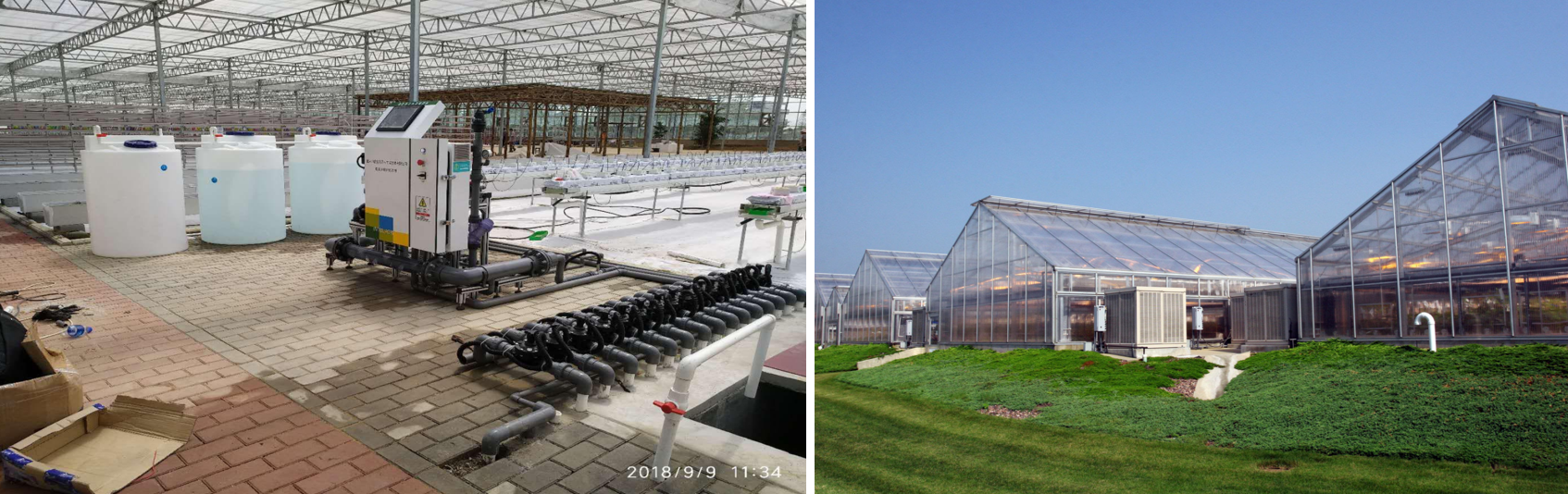
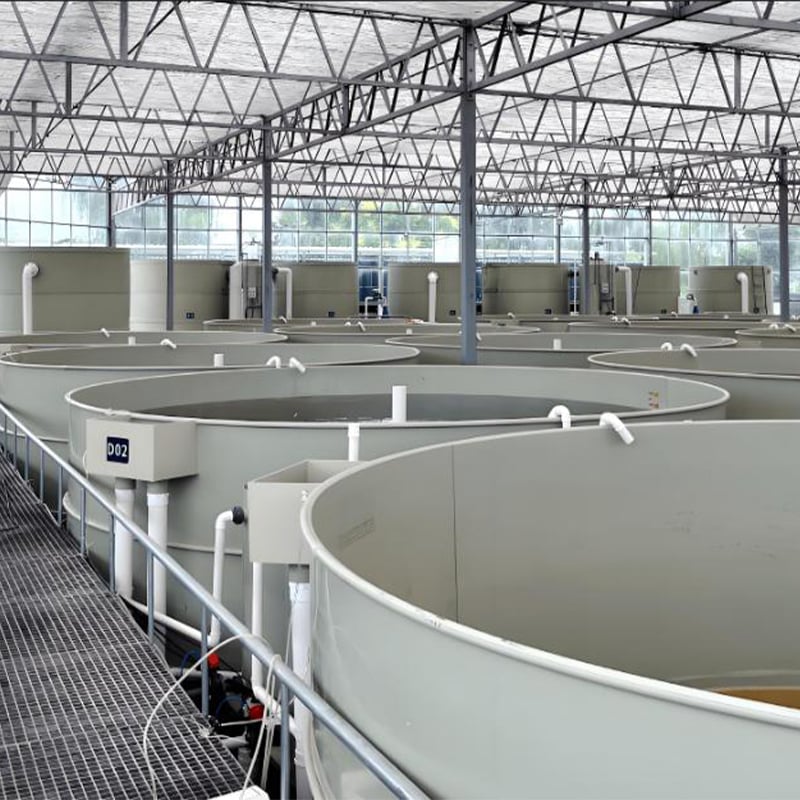
Figure 2: Fourth-generation zero-energy AI-powered greenhouse
Recommended Products
Hot News
-
The Christmas discount has arrived
2024-12-26
-
Is it true that raising fish in high-density canvas fish ponds is more efficient than ordinary ponds?
2024-12-16
-
Advantages of galvanized canvas fish pond
2024-10-14
-
High-density fish farming technology, fish pond cost, canvas fish pond, canvas pond, high-density fish farming
2024-10-12
-
Why choose flowing water high-density aquaculture
2023-11-20