

5 reasons for high ammonia-nitrogen levels in recirculating fish ponds: a step-by-step troubleshooting guide, from biochemical filter volume to feed intake
I. Introduction
What should be done about high ammonia-nitrogen levels in recirculating aquaculture systems? In most cases, excessive ammonia-nitrogen levels are not caused by equipment failure, but rather by a mismatch between five key factors: biological filtration, dissolved oxygen levels, the positioning of UV lamps, biofilm formation time and feeding rates. This article outlines the five causes of high ammonia-nitrogen levels in recirculating aquaculture systems in the order of on-site troubleshooting, along with a safety threshold table and a five-step emergency response protocol. It is applicable to galvanised steel fish tanks, circular tanks and industrialised recirculating aquaculture facilities.
II. Why Ammonia Nitrogen Is the Number One Killer in Recirculating Aquaculture Systems
Ammonia nitrogen (TAN) exists in water in two forms: molecular ammonia (NH₃) and ammonium ions (NH₄⁺). It is molecular ammonia that is truly toxic, and its proportion increases as pH and temperature rise. At a pH of 8.0 and a water temperature of 28°C, its toxicity is approximately 5-6 times that at a pH of 7.0. As recirculating water systems typically maintain high dissolved oxygen levels and slightly elevated pH year-round, fish suffer damage more rapidly than in flowing-water systems once ammonia-nitrogen levels rise; therefore, it must be monitored as the primary risk indicator.
III. Five Causes of High Ammonia-Nitrogen Levels in Recirculating Aquaculture Systems
Cause 1: Biochemical filter volume ratio is less than 10%
This is the most common cause. During the design phase, in order to reduce investment costs, the biochemical filter volume is often limited to 6-8% of the water volume, resulting in an insufficient total population of nitrifying bacteria to break down daily excreta and uneaten feed. The safety threshold is an effective biological filter volume of no less than 10% of the water volume; a prudent approach is 15%. At the same time, the nitrification load should be kept within 0.3 kg TAN/(m³·d). A 20 m³ pond equipped with a 3 m³ effective filter bed is configured in accordance with this principle.
Reason 2: Insufficient dissolved oxygen; nitrifying bacteria ‘can’t catch their breath’
Nitrification is a highly aerobic process; approximately 4.6 g of dissolved oxygen is consumed for every 1 g of ammonia nitrogen oxidised. In many ponds, aeration is treated as an afterthought: air pumps are undersized, aeration discs are blocked, and the air-to-water ratio is below 1:1. The result is that whilst the fish do not come up for air, ammonia nitrogen levels rise silently. Nitrification efficiency drops significantly when dissolved oxygen falls below 5 mg/L; it is recommended to maintain levels at 6 mg/L or above.
Reason 3: Incorrect positioning of the UV steriliser
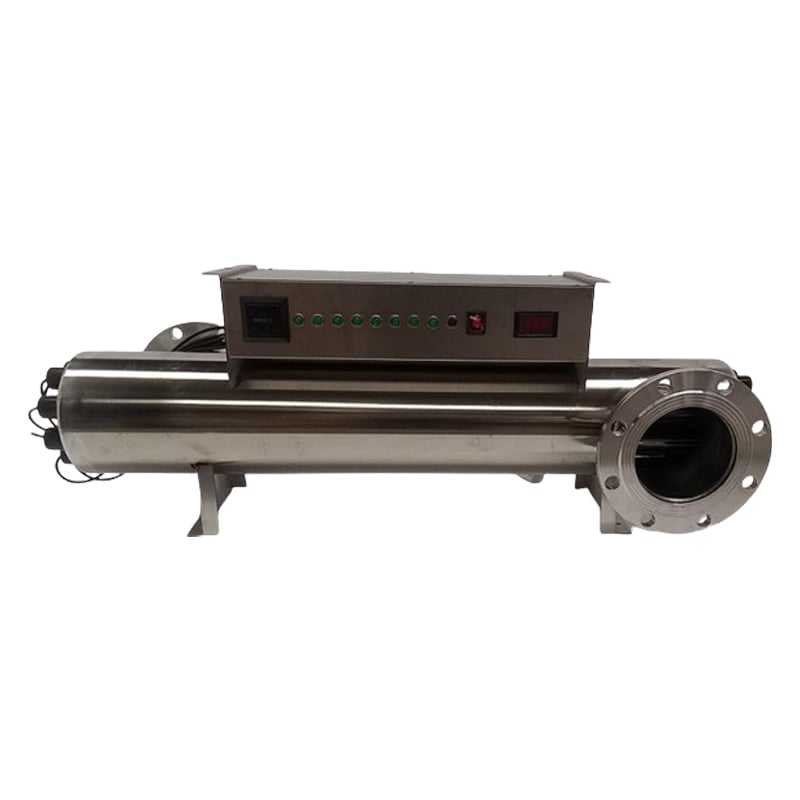
Installing the UV unit before the sand filter or the biological filter means it is shielded by suspended solids and continuously kills the nitrifying bacteria flowing through the water, effectively cultivating bacteria whilst simultaneously killing them. The correct approach is to install it on the return pipe after the biological filter, with a power rating of 15-25 W/m³ and a final dose of no less than 30 mJ/cm²; the quartz sleeve must also be cleaned regularly, as scaling of the sleeve is the most common cause of UV failure.
Reason 4: Fish were introduced before the system had developed a biofilm
A new tank typically requires 3-6 weeks from the time water is introduced until nitrifying bacteria have matured; this takes even longer when the water temperature is below 20 °C. Some projects, in a rush to meet deadlines, introduce fish just one week after filling the pond, resulting in ammonia-nitrogen levels surging to over 1.0 mg/L by the third day. Determining whether the system is mature is straightforward: only commence feeding and adding feed once both ammonia-nitrogen and nitrite levels have fallen below 0.2 mg/L for three consecutive days.
Reason 5: Feeding and stocking density exceed design specifications
Protein in feed is the primary source of ammonia-nitrogen. Increasing stocking density from 40 kg/m³ to 60 kg/m³, or raising the feeding rate from 2% to 3%, can increase ammonia-nitrogen production by more than 50%. Furthermore, when uneaten feed accumulates in hard-to-reach corners at the bottom of the pond and sand filters are not backwashed promptly, the build-up of organic matter causes heterotrophic bacteria to compete for oxygen, leading to a further decline in nitrification efficiency. Adhering to the design stocking density and adjusting feed rations according to the fish’s feeding behaviour is the most cost-effective method of controlling ammonia nitrogen.
IV. Emergency response to excessive ammonia nitrogen levels: a 5-step procedure
1. Suspend feeding: Immediately stop feeding for 24-48 hours to cut off the source of ammonia nitrogen.
2. Dilution: Increase water changes or top-up water to dilute the water volume by 30%–50% in a single operation, ensuring the water temperature difference does not exceed 2°C.
3. Aeration: Operate aeration systems at full capacity to raise dissolved oxygen levels to above 7 mg/L, thereby supplying oxygen to nitrifying bacteria.
4. Bacterial supplementation and water quality adjustment: Add nitrifying bacteria preparations; check water temperature and pH, maintaining pH within the range of 7.5-8.0.
5. Stocking reduction: If necessary, reduce stocking density or transfer fish to separate tanks; resume feeding only once parameters have stabilised.
Table 1: Table of Water Quality Safety Thresholds
|
Indicators |
Safety value |
Threshold value |
Threshold value |
|
Total Ammonia Nitrogen (TAN) (pH < 7.5) |
≤0.2 mg/L |
0.2-0.5 mg/L |
>0.5 mg/L |
|
Molecular ammonia NH₃ |
≤0.02 mg/L |
0.02-0.05 mg/L |
>0.05 mg/L |
|
Nitrite NO₂⁻-N |
≤0.1 mg/L |
0.1-0.3 mg/L |
>0.3 mg/L |
|
Nitrate NO₃⁻-N |
≤50 mg/L |
50-100 mg/L |
>100 mg/L |
|
Dissolved Oxygen (DO) |
≥6 mg/L |
4-6 mg/L |
<4 mg/L |
|
pH |
7.0-8.0 |
8.0-8.5 |
>8.5 |
V. Preventing the problem at source: ensure these three aspects are correct in the system configuration
1. Biochemical filter volume ratio: set at 15% of the water volume, with a minimum of 10%; this offers the highest cost-effectiveness in addressing ammonia-nitrogen issues.
2. Aeration capacity: an air-to-water ratio of 1:1 or higher, with dissolved oxygen levels maintained at 6 mg/L or above; operate one circulation pump whilst keeping another on standby to prevent oxygen depletion due to pump failure.
3. UV positioning: Install on the return pipe downstream of the biological filter, at 15-25 W/m³, with a final dose of ≥30 mJ/cm²; ensure it is fitted with a washable quartz sleeve.
VI. Contact Us
If you are investigating ammonia-nitrogen issues in your recirculating aquaculture system, please send the tank volume, stocking density and current ammonia-nitrogen and nitrite readings to Wolize. We will calculate the biochemical filter volume ratio and nitrification load free of charge and provide recommendations for rectification. Book a water quality diagnosis for your recirculating aquaculture system now.
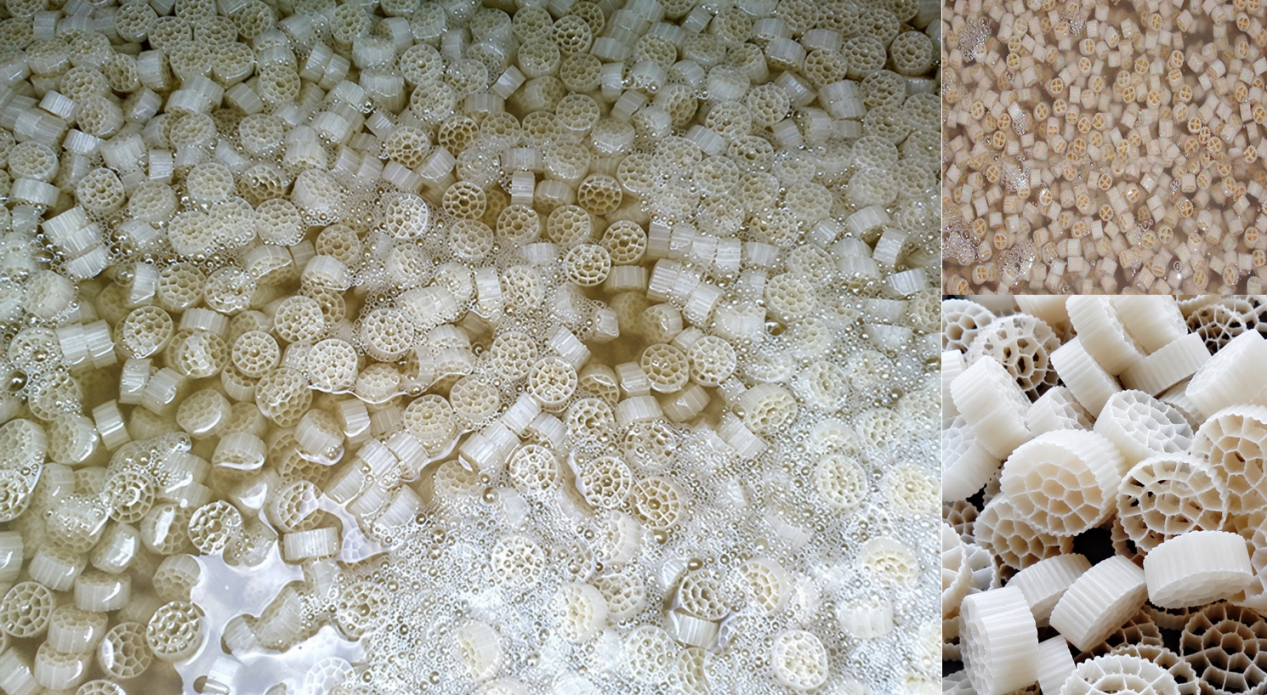
Figure 1: Biofilm formation on biochemical filter media
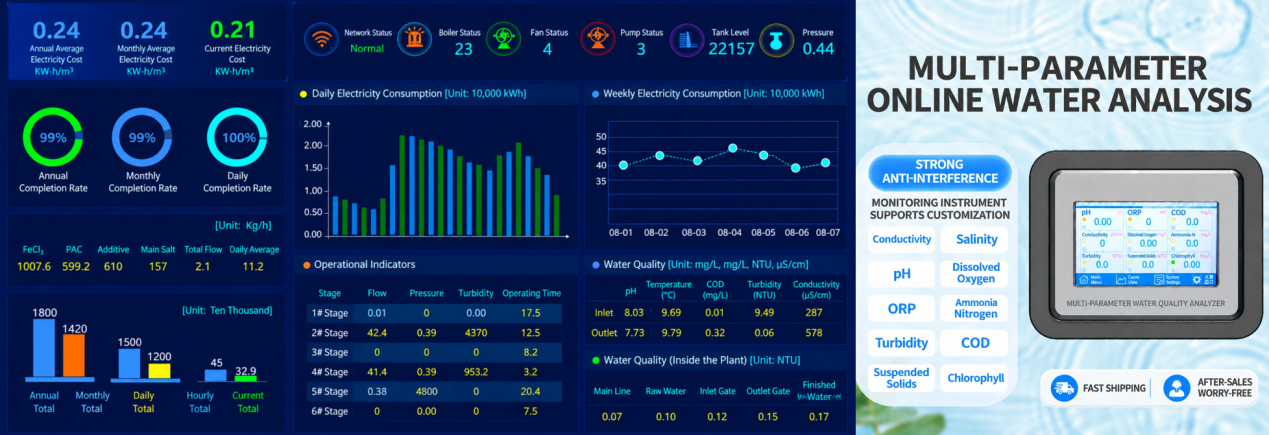
Figure 2: Workshop water quality display board/online monitoring screen
Recommended Products
Hot News
-
What does a fourth-generation, zero-energy-consumption AI-powered RAS greenhouse look like? An analysis of trends in industrialised recirculating aquaculture systems
2026-10-10
-
Wolize Launches New Generation of Smart Recirculating Aquaculture System (RAS) for Crustacean Farming Globally: Reshaping the Crustacean Supply Chain with an 85% Survival Rate and AI-Powered Precision Harvesting of Soft-Shell Crabs
2026-09-24
-
Land-based recirculating aquaculture: 95% reduction in water consumption and stable fish production throughout the year — the green revolution in modern aquaculture
2026-09-24
-
One System, Every Species: How RAS Makes Multi-Species Fish Farming Possible
2026-08-20
-
Flow-Through Aquaculture System: Let the Water Flow, Watch the Fish Grow
2026-08-20
-
The Essential Role and Research Progress of RAS Proteins in Cell Biology and Cancer Therapy
2026-08-14
-
Flow-through Aquaculture: A New Frontier in the Aquaculture Industry
2026-07-29
-
The Renin-Angiotensin System (RAS): Mechanisms, Functions and Clinical Significance
2026-07-13
-
The Future of Land-Based Farming: Why RAS is the Ultimate Investment for Modern Aquaculture
2026-06-26
-
How Intelligent RAS Redefines Your Aquaculture Success
2026-06-11