

Wolize Launches New Generation of Smart Recirculating Aquaculture System (RAS) for Crustacean Farming Globally: Reshaping the Crustacean Supply Chain with an 85% Survival Rate and AI-Powered Precision Harvesting of Soft-Shell Crabs
1. Abstract
In June 2026, WoLize officially launched its next-generation industrial-grade intelligent Vertical Recirculating Aquaculture System (Vertical RAS) integrated solution for crab farming to the global commercial aquaculture market. Addressing the industry pain points associated with high-value crustacean species such as the blue crab (Scylla), spiny crab (Portunidae) and treasure crab (Calappa philargius)—namely," mud crabs, blue swimming crabs and king crabs, which are characterised by “high cannibalism rates, difficult-to-control diseases and dependence on natural tides”- WoLize has deeply integrated an independent modular three-dimensional matrix, closed-loop ultra-pure water treatment and machine vision-based moulting monitoring. In international commercial demonstration projects, the company has successfully achieved a survival rate exceeding 88%, a water recirculation rate of over 97.5%, and the stable, round-the-clock industrial production of soft-shell crabs commanding a premium price.
Key Performance Indicators:
(1). Survival Rate: 88.5% (more than three times higher than the 25% achieved in traditional open-pond farming)
(2). Water Recirculation Rate: 97.5%+ (eliminates reliance on coastal water sources and saves over 95% of water)
(3). Soft-shell crab yield: 99.2% (AI-powered vision captures the moulting window within seconds)
2. Description of the Closed-Loop Architecture for the Core Process
(Process diagram: Closed-loop process flow chart for recirculating water)
Step 01-Three-dimensional vertical aquaculture matrix: ‘One crab per box’ physical isolation; CFD-optimised dual-outlet micro-hydrodynamic flow field at the base, rapidly flushing away uneaten feed and excrement within 30 seconds.
Step 02-Precision Drum Microfilter: Utilises a 40-micrometre 316L stainless steel filter screen to rapidly strip away and retain over 85 per cent of uneaten feed and faeces before solids decompose.
Step 03-Protein Separation and Ozone Decolourisation/Oxidation: Micro- and nano-bubbles efficiently adsorb colloidal organic matter (DOC) and surfactants, whilst micro-doses of ozone work synergistically to degrade and decolourise the material, destroying the breeding ground for Vibrio bacteria.
Step 04-High-Load Moving-Bed Bioreactor: Specialised highly hydrophilic bio-carriers (effective specific surface area > 1,200 square metres per cubic metre) routinely maintain total ammonia nitrogen (TAN) below 0.3 mg/L and nitrite below 0.05 mg/L.
Step 05-Counter-current packed-bed degassing and heat recovery: To address high-density respiration characteristics, free carbon dioxide is forcibly stripped to below 10 mg/L; combined with a total heat recovery duct, this minimises heat loss from greenhouse/workshop water bodies.
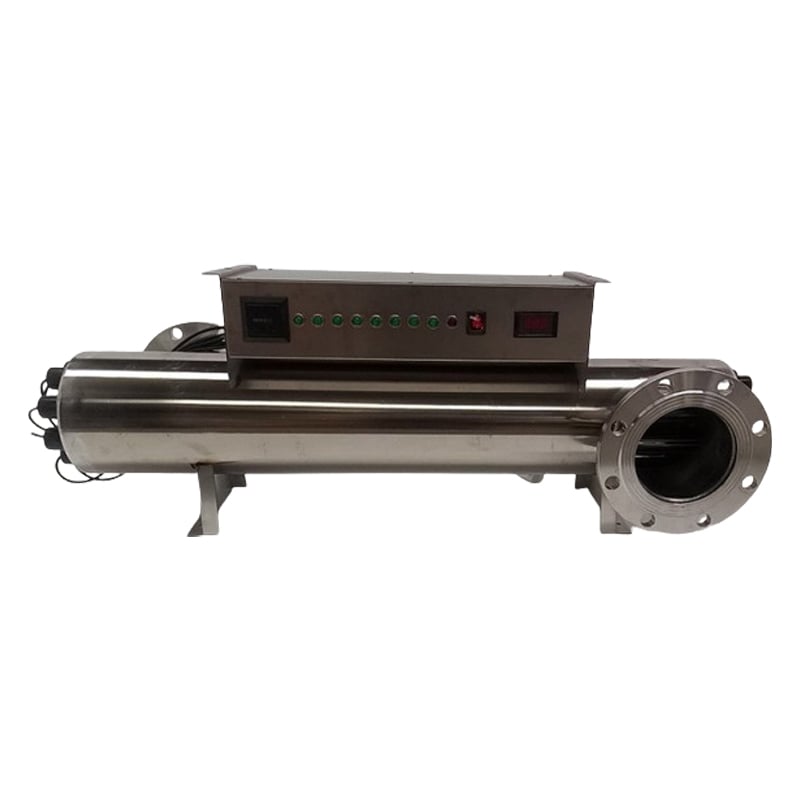
Step 06-Medium-pressure UV and pure oxygen pressure stabilisation: 40 mJ/cm² UV irradiation achieves broad-spectrum inactivation of pathogenic bacteria and viruses; the effluent is supplied with oxygen at a constant pressure via a high-efficiency oxygen mixer, ensuring that the dissolved oxygen (DO) in the water entering the tanks remains between 6.5 and 8.0 mg/L.
Fully internal closed-loop system: the water circulation cycle is less than 45 minutes, with daily fresh seawater/artificial water top-up requiring only 1.5%-2.5% of the total water volume.
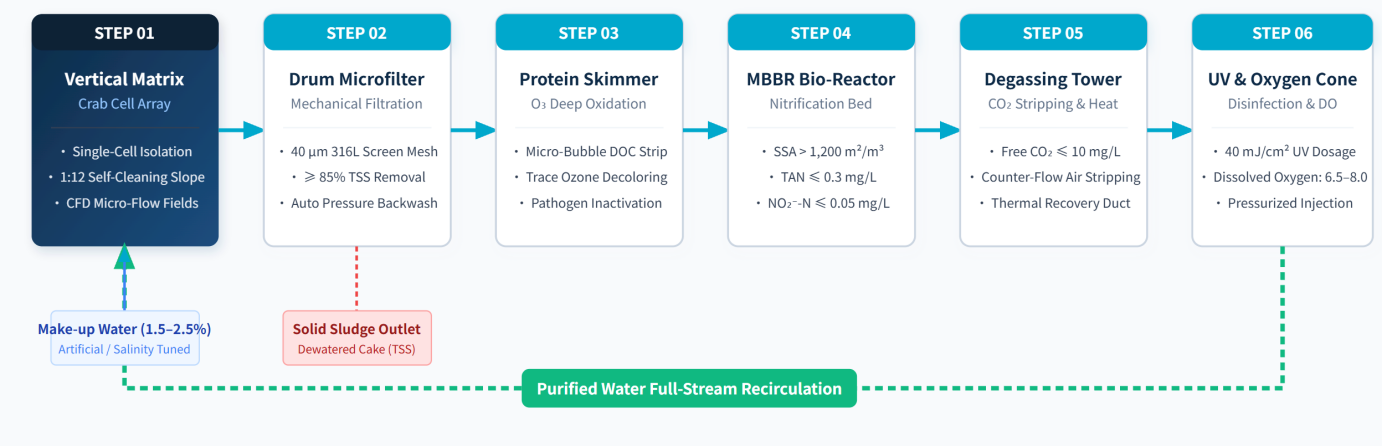
Figure 1: WoLize Vertical RAS Industrial Closed-Loop Recirculating Water Flow
3. Customer Background and Key Challenges
Global demand for crustacean seafood has remained consistently high; however, under traditional farming methods—such as those utilising coastal mudflats, mangrove ponds and cage farming—operators face irreconcilable ecological and commercial constraints:
(1). Extremely low survival rates due to cannibalism: Blue crabs are highly territorial and naturally aggressive; during the vulnerable moulting period, they are highly susceptible to being eaten by their own kind. The overall survival rate at harvest in traditional ponds is typically only 20%-30%, resulting in extremely high losses of juvenile stock.
(2). Risk of coastal pathogen spillover and antibiotic overuse: Traditional large-scale seawater changes are highly prone to introducing pathogens such as White Spot Syndrome Virus (WSSV) and Acute Hepatopancreatic Necrosis Disease (AHPND), whilst the misuse of antibiotics further triggers international food safety barriers.
(3). Climate constraints and the risk of missing the window of opportunity for soft-shell crabs commanding a premium price: Mortality rates during overwintering in traditional open ponds are high, and soft-shell crabs begin to harden within 2 to 4 hours of moulting. The rate of missed detections during manual night-time pond inspections exceeds 40%, resulting in the loss of premiums several times higher than the standard price.
4. Technical Solutions and Workshop Layout Design
To meet the commissioning requirements of large-scale commercial facilities, WoLize provides a comprehensive range of standardised turnkey solutions and modular workshop layouts:
4.1 Intelligent Workshop Space Layout Design
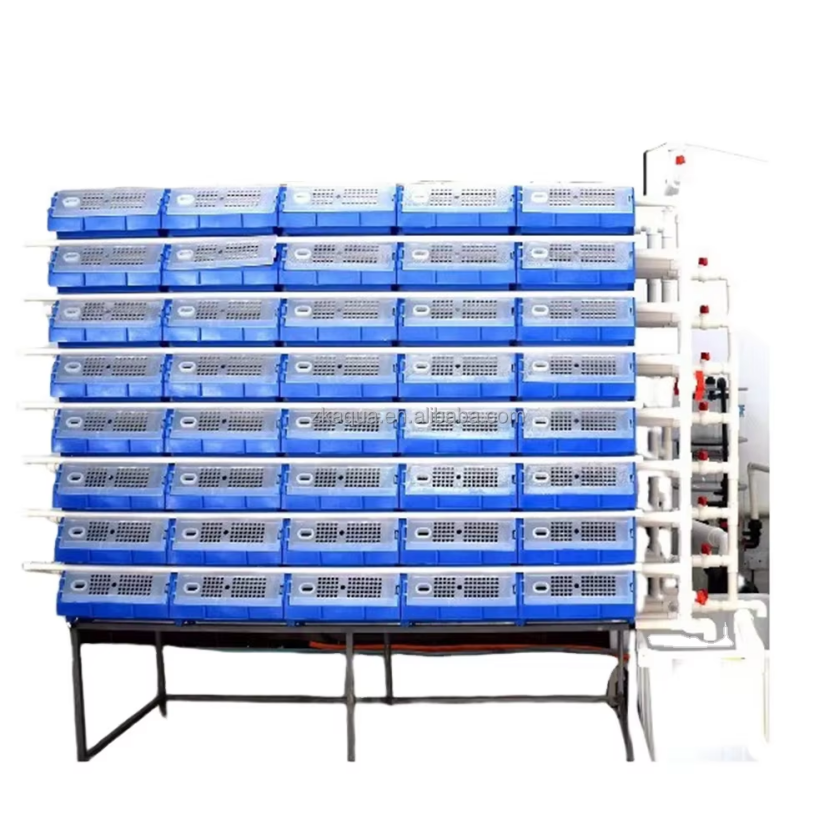
(Workshop diagram: Spatial layout of a modern indoor vertical RAS crab farm and IoT matrix)
Figure 2: WoLize Modern Indoor Vertical RAS Crab Facility Layout & IoT Matrix
(1). Modular Vertical Individual-Box Matrix Area : Each unit consists of 8 to 10 layers of food-grade virgin PP aquaculture boxes stacked vertically. Each unit integrates independent micro-flow water supply nozzles and anti-blockage overflow drainage ports; 35,000-50,000 individual adult crab rearing positions can be deployed per 1,000 square metres of floor area.
(2). Centralised Water Treatment Skid Island : Hydraulic elevations are precisely calculated in stages; aquaculture water flows by gravity through bottom gratings into mechanical filtration and biochemical treatment systems, reducing head loss by 35% and significantly cutting the pump’s routine power consumption.
(3). AI Vision-Based Automatic Inspection Rail and Robot System : A high-precision, overhead, mobile rail-mounted camera, combined with infrared illumination, scans each aquaculture box around the clock, monitoring feeding rates, vitality indices and moulting status in real time.
4.2 Core Equipment and Intelligent Features
(1). CFD-optimised, biomimetic self-cleaning rearing box configuration: The box base features a 1:12-gradient, inward-sloping debris collection channel, combined with tangential-layer water flow for hydraulic flushing, thoroughly eliminating stagnant water zones and the accumulation of uneaten feed and faeces, thereby preventing localised anaerobic fermentation.
(2). AI machine vision soft-shell crab second-level early warning system : Deep learning algorithms, trained on millions of crustacean moulting patterns, achieve a recognition accuracy of 99.2%. Upon detection of adult crab moulting, the system immediately triggers audible and visual alerts as well as mobile notifications, ensuring capture and flash-freezing are completed within 120 minutes to produce Grade 1 soft-shell crabs.
(3). Food-grade closed-loop disinfection and ultra-low-energy temperature control : Dual interception via medium-pressure ultraviolet (UV) light and trace amounts of ozone, with zero chemical additives throughout the entire process; coupled with an air-source/water-source heat pump temperature control system to maintain the optimal metabolic growth temperature of 26-28 °C year-round.
5. Technical Specifications and Comparison of Benefits
Table 1: Comparison of Technologies and Benefits
|
Key indicators Farming methods |
Traditional model |
WoLize Smart Vertical RAS System |
|
Survival rate throughout the entire rearing cycle |
20% – 30% (severe food wastage) |
85% – 92% (an increase of nearly threefold) |
|
Land-use output ratio |
0.8–1.2 kg/square metre |
18–25 kg/square metre (a 15–20-fold increase in production capacity) |
|
Daily water replenishment rate |
30%–100% of the rearing volume |
1.5% – 2.5% of the rearing volume (water savings of 95%+) |
|
Ammonia-nitrogen concentration in water |
1.0–4.0 mg/L (sharp fluctuations) |
≤ 0.3 mg/L (consistently safe, with an 85 per cent improvement in water quality stability) |
|
Soft-shell crab catch success rate |
< 60% (high rate of human error) |
≥ 99% (AI-powered 24/7 monitoring, double the returns on high-premium investments) |
|
Biosafety levels |
Prone to attack by external pathogens; requires the use of pesticides |
Fully enclosed physical inactivation, antibiotic-free (meets the highest export standards in the industry) |
6. Analysis of Operational Data and Performance Comparisons
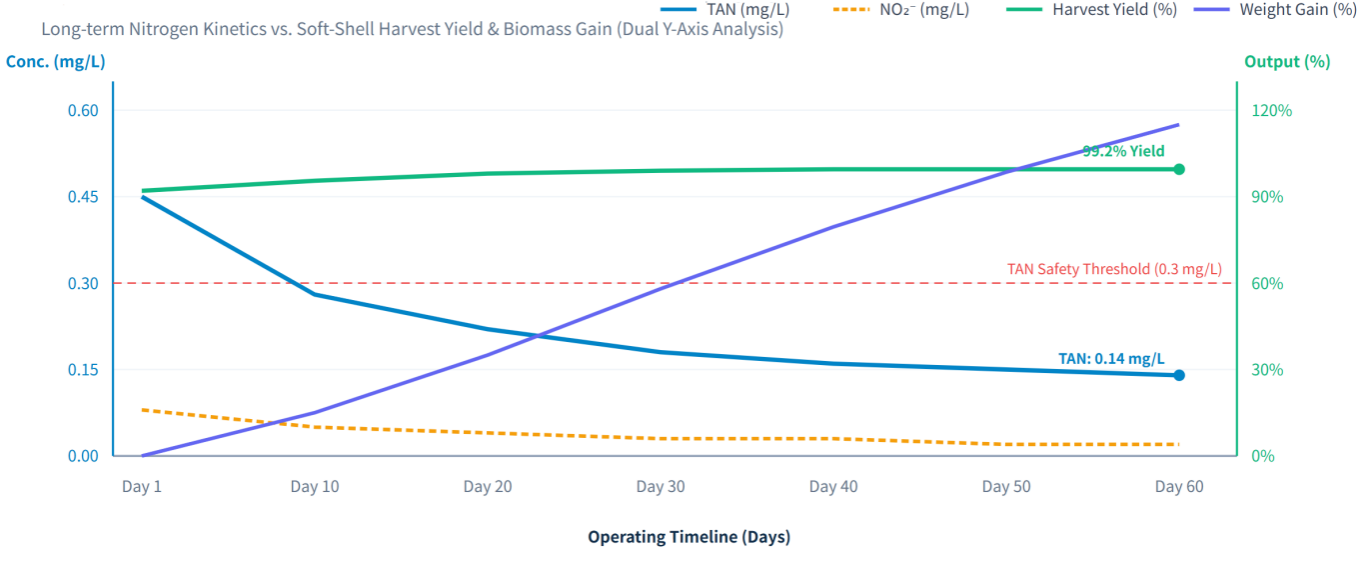
Figure 3: 60-Day Water Quality Stability & Growth Acceleration Curve
(1). Water quality parameters remained stable over an extended period: Under continuous high-load feeding of high-protein feed, the MBBR nitrifying bacterial community and the microfiltration protein separation system worked in concert to withstand the load; total ammonia nitrogen levels in the influent and effluent remained stable throughout the period at 0.12–0.28 mg/L, and nitrite levels did not exhibit the ‘double-peak surge’ commonly seen in open ponds, thereby eliminating stress-induced moulting mortality.
(2). Shorter fattening cycle and improved feed conversion ratio: In a ‘single-compartment’ environment maintained at a constant temperature and free from wind and wave stress, the energy expenditure associated with blue crab activity was significantly reduced, whilst the feed conversion ratio improved by 22%; the short-term fattening cycle for market-sized crabs was shortened from the traditional 45 days to 25-28 days.
(3). Overcoming reliance on coastal locations: The system has successfully undergone trial runs and validation in inland greenhouses located over a thousand kilometres from the coastline. Through the use of artificially salted water and a high proportion of recirculation, it has completely eliminated dependence on marine use rights and natural coastlines.
7. Frequently Asked Questions
Q1: What is the approximate return on investment (ROI) period for the vertical recirculating aquaculture system for crab farming?
A: In commercial scenarios where the primary focus is on fattening high-value blue crabs, converting meat crabs into roe crabs, or specialising in soft-shell crabs—combined with regular year-round harvesting—the ROI period for the entire system is typically between 1.8 and 2.8 years, which is significantly better than that of traditional large-scale fish farming projects.
Q2: Is the system compatible with different crab species and inland freshwater/brackish water environments?
A: It is fully compatible. The system is equipped with a fully automated salinity and ion balance control module, allowing it to flexibly accommodate species such as the serrated-edge blue crab, burrowing blue crab, blue crab, Chinese spider crab and even the Australian shore crab. Combined with a man-made sea salt supplementation scheme, the system can be directly invested in and constructed in inland areas and integrated utilisation parks on saline-alkali land.
Q3: Given the high-density, multi-tiered matrix, are daily operations, maintenance and cleaning cumbersome?
A: WoLize’s individual aquaculture modules feature a modular, quick-release design, with inner walls treated with a special mirror-finish anti-biofouling coating. Daily wastewater discharge relies entirely on the self-cleaning action of the water flow at the base; following each harvest, a crane-mounted high-pressure spray disinfection track can be utilised, enabling a single person to complete the cleaning and restart of a 1,000-module unit within half a day.
8. Partnership Enquiries (Call to Action)
Are you ready to embark on a modern, land-based, high-density, multi-tiered crab farming venture? WoLize’s global engineering and technical team provides a full-process, turnkey service ranging from site planning and surveying, hydraulic and water quality material balance modelling, and multi-tiered hardware integration to the commissioning of the biological biofilm.
Recommended Products
Hot News
-
The Christmas discount has arrived
2024-12-26
-
Is it true that raising fish in high-density canvas fish ponds is more efficient than ordinary ponds?
2024-12-16
-
Advantages of galvanized canvas fish pond
2024-10-14
-
High-density fish farming technology, fish pond cost, canvas fish pond, canvas pond, high-density fish farming
2024-10-12
-
Why choose flowing water high-density aquaculture
2023-11-20